Case study · August 5, 2026
Kids’ activities: what we kept, cut and swapped
The goal was not a perfectly optimized childhood. It was two children with energy and two adults with a calendar.
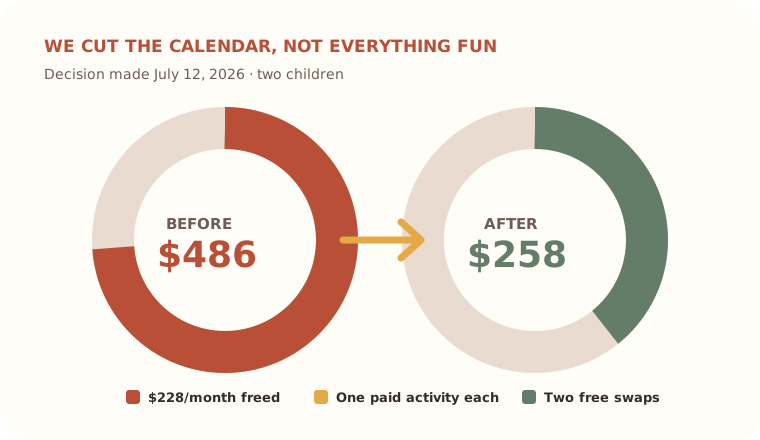
We reduced two children’s activities from $486 to $258 a month without cutting both favorites. On July 12, 2026, we kept soccer and piano, dropped gymnastics and club art, and replaced them with library studio sessions and a parks program. The $228 monthly difference also returned three weeknights to the family calendar.
The price on the registration page was incomplete
Our spring 2026 calendar contained five organized activities across two children. Monthly tuition or dues appeared to total $351. Once we averaged registration, uniforms, equipment, recital charges, and tournament fees, the real monthly cost was $486 during the active season. Driving averaged four hours and 40 minutes a week.
We had added activities one decision at a time. Soccer registration in January did not feel connected to an April piano increase or a June gymnastics renewal. The budget category showed the combined cost; the calendar showed the combined exhaustion. Neither child was demanding all five. Inertia was.
| Activity | Full monthly average | Decision | Replacement or reason |
|---|---|---|---|
| Soccer | $145 | Keep | Child 1’s clear priority |
| Piano | $113 | Keep | Child 2 practices without prompting |
| Gymnastics | $126 | Cut | Parks tumbling, $0 |
| Club art | $72 | Swap | Library studio, $0 |
| Seasonal coding | $30 | Pause | School club, included |
| Monthly total | $486 before | $258 after | $228 freed |
What we kept
Soccer stayed because our eleven-year-old chose it immediately and attended 92% of sessions in the prior season. The $145 monthly average includes $108 dues, $12 registration allocation, $15 equipment replacement, and $10 in tournament and snack costs. We declined an optional $68 warm-up jacket and kept last year’s usable bag.
Piano stayed because our eight-year-old practices four days most weeks without being chased. The $113 average combines $96 lessons, a $9 recital-and-materials allocation, and $8 for books and tuning spread across the year. Its travel burden is low because the teacher is twelve minutes away and schedules directly after school.
What we cut
Gymnastics cost $104 monthly before the annual membership, meet clothing, and mandatory showcase fee raised the active-month average to $126. Attendance fell below 60% during May and June. Our child enjoyed the class once present but resisted leaving home for it. That is not failure; it is evidence that the activity no longer justified the money and Thursday rush.
The seasonal coding course was only $30 a month after averaging its short term, but it occupied the same afternoon as a no-cost school club beginning September 9. We paused paid registration until December rather than reserving both “just in case.” A pause is easier to discuss than a forever decision and still protects the budget now.
What we swapped
Club art was the hardest decision. At $72 monthly, it supplied good materials and a kind teacher. The library’s free Saturday studio did not offer identical instruction, but it offered tables, rotating projects, and materials twice a month. We tested it on June 27 before canceling. Our child liked the looser format and a friend could attend.
A parks-department tumbling session replaced some of gymnastics’ physical play. It is free, outdoors, and less progressive. That makes it a swap for movement, not a claim that free programs are identical to coached training. We budgeted $18 for occasional open-gym visits, which is why the after total remains $258 rather than exactly the two retained activities.
The conversation with the children
We did not hand them the household budget and ask which sibling deserved $126. We said the calendar felt crowded and each child could choose one paid priority for fall. Then we described the free options and tried them. Children can participate in trade-offs without carrying adult financial anxiety.
We also promised to review the arrangement on November 15, 2026. If a free substitute is consistently disappointing or a retained activity is no longer used, the answer can change. A budget is a current plan, not a moral ranking of interests.
Where the $228 goes
We assigned $100 monthly to school and activity sinking funds, $78 to a family weekend category, and $50 to unstructured spending the children can help choose. The full $2,736 annual projection is not “saved” until twelve transfers occur. We will measure it month by month.
For households that want money set aside before registration, our Goodbudget envelope test shows the method clearly. Couples who mainly need to see which adult paid a fee may prefer the sharing controls in our Honeydue review. The sinking-fund definition is also useful before annual dues return.
FAQ
How much did we save on children’s activities?
We reduced the monthly average from $486 to $258, freeing $228 per month or $2,736 over twelve months if the schedule holds.
How did we choose which activities to keep?
Each child chose one paid activity they consistently enjoyed. We also considered total cost, attendance, transport time, and whether a free substitute met the same need.
Did the children participate in the cuts?
Yes. We discussed calendar space rather than asking them to rank the family’s finances. Each child chose a priority and tested one free alternative before registration deadlines.